
Hear us on Apple Podcasts, iHeart, and Spotify Podcasts. Subscribe now!
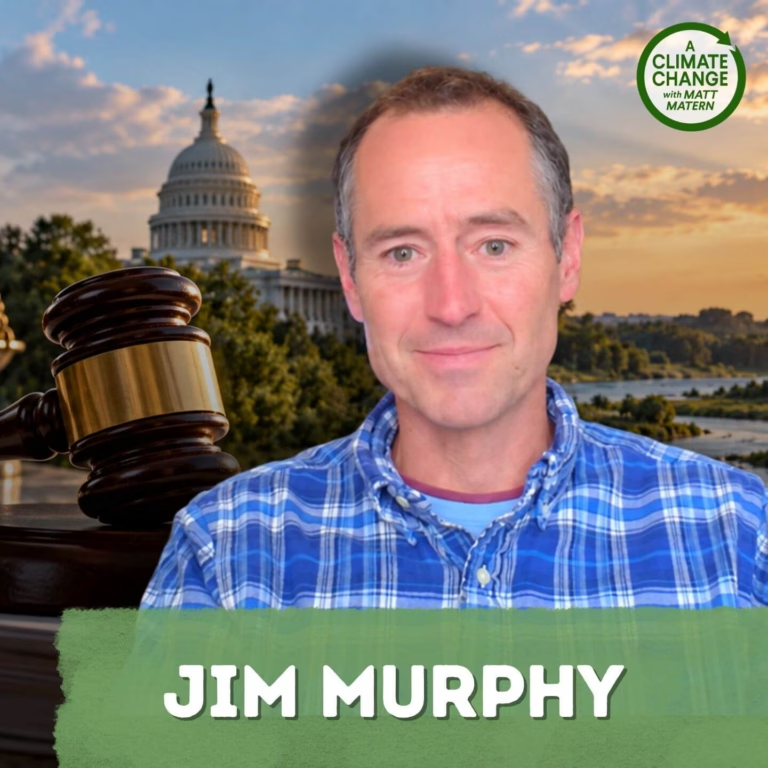
Matt Matern speaks with Jim Murphy, Associate Vice President of Legal Advocacy at the National Wildlife Federation, about EPA’s proposal to rewrite which streams and wetlands the Clean Water Act actually protects. Jim explains what the rule would do – by his estimate, removing federal protection from up to 60% of the nation’s stream miles and well over 90% of historically protected wetlands – and why streams that don’t flow year-round still carry pollution downstream. He and Matt trace how we got here, from the Cuyahoga River fire and the 1972 Clean Water Act through the Supreme Court’s 2023 decision, and get into what happens when roughly half the states have no protections of their own to fall back on. They also cover the nitrate crisis overwhelming Iowa’s water utilities, what fewer federal permits mean for the AI data center boom, and why Jim thinks clean water may be the issue that pulls conservation back across party lines.
Iowa has one of the highest rates of cancer in the country. They have a major nitrate problem, which is basically caused by ag pollution. But it’s really getting at levels where it is overwhelming. It results in what’s called blue baby syndrome, which is a disease that impacts infants and children. Climate got very divisive, even though a lot of the solutions are bipartisan. A lot of renewable energy projects really benefit red areas. Water is a little more immediate to people, a little harder to make partisan.
You listen to A Climate Change. This is Matt Matern, your host. I’ve got a great guest on the program, Jim Murphy, Jim’s associate vice president of legal advocacy at the National Wildlife Federation. Welcome to the show, Jim.
Welcome, Matt. Thanks for having me.
So, tell us a little bit about your work at the National Wildlife Federation and and kind of what drew you into the environmental movement?
Yeah, so I have the great job of of helping to coordinate the the cross programmatic legal work at National Wildlife Federation. National Wildlife Federation is one of the nation’s largest and oldest conservation groups. It was founded in 1936 by a group largely then of hunting and angling conservationists, but over the years, really grown to become, I think, one of the the widest representative conservation groups. We represent members from kind of all political spectrums, all dedicated to preserving the the natural world for both people and wildlife.
You know, we do a lot of advocacy around you know clean air, clean water, healthy habitat, making sure that we’re addressing climate change, and you know, as a result of that, we engage in a lot of of legal work, both with administrative agencies when they do rulemakings and when they interpret laws and when they implement laws, and also you know with the courts when you know we need to protect places or species or when there are interpretive rules that we disagree with, so I work with our waters program and our lands program, which is kind of our two chief programs, to coordinate that legal work and make sure that we’re engaging effectively and bringing the voice of wildlife and conservation to some really important issues.
Well, I understand that EPA has just proposed a new rule that would that could strip the Clean Water Act protection from a third of America’s streams. Tell us a little bit about that. I guess public comment closes October 9, and so what what do you recommend the listeners can do, and you know what are you guys doing?
Yeah, so the proposal, and it’s you know unfortunately it’s not the only kind of jaw dropping proposal out there for some of our our nation’s chief environmental laws, but yeah, EPA and the Corps are proposing to effectively strip Clean Water Act protections, which are the basic pollution destruction protections that the federal government affords lakes, rivers, streams, and other important waters by redefining which waters are protected. I think it’s important to note that this change comes on the heels of a Supreme Court decision in 2023 that dramatically reduced the number of waters that are protected. But this proposal goes goes much further.
It would remove protections for actually up to 60% of streams nationwide, at least in terms of miles, by removing protections for streams that don’t flow effectively year round, and it would basically remove protection for well over 90% of wetlands that were historically protected. So, if this proposal goes through in its current form, we’re talking about federal protections for waters that would be, you know, a shadow of what they have been for the last 50 years.
So, in terms of the process of of how that moves forward in the rulemaking, so they propose this new rule. People have time to object to it. My understanding is then the objections then get ruled on by courts as to whether or not EPA kind of abused its.
Yeah, exactly. So where we, you know, it’s been a pretty long and tortured path for this issue. Just to give a little of the historical context, yeah, when the Clean Water Act was passed in 1972, we had you know kind of all sorts of awful water pollution events happening that that clearly demanded attention. You know, in California, we had the Santa Barbara oil spill, which was you know a very infamous incident. You know, the Cuyahoga River was on fire. Lake Erie was was effectively biologically dead.
So Congress passed the Clean Water Act in 1972, and it was originally interpreted basically to protect all surface waters from you know small wetlands and and small streams down to to larger lakes and rivers on the the pretty you know common sense scientific basis that water flows downhill and and you know, if you’re not protecting upstream, then what’s downstream gets gets polluted, and that was the accepted practice for a good 30 years.
You know, across administrations of both parties, Congress acted as if you know that was the pretty clear intent of the law. Then, in the early 2000s, the Supreme Court kind of shed a little bit of doubt on that, and the the issue got somewhat politicized. So, really, from about 2001 to recently, how that how the scope of the act was interpreted in terms of how broadly it was applied, a kind of ping pong depending on you know which party was was occupying the presidency.
The Supreme Court, with a more conservative court, revisited that issue in in 2023 and adopted what had previously been a minority, but but much more restrictive view of of how broad the Clean Water Act is. So the Biden administration responded in 2023 by basically incorporating the language of that Supreme Court decision into the rule in 2025, the Trump administration decided that that rather narrow view the Supreme Court had wasn’t wasn’t enough, so they proposed a rule to narrow it even further.
They they took comment, they took some time, then they took the unusual step of instead of issuing a new rule in earlier this month, they they issued a supplement to their original rule where they’ve decided they want to restrict it even further. That comment period is going to end October 9. Then it’s going to obviously be you know the agencies are required by law to at least look at the comments and respond to them. We don’t expect that they’re going to change course much. Then we will probably see a rule issued. It’s you know it’s tough to tell.
We thought that there would be a rule issued by now. We didn’t expect this supplemental process, so yeah. With that grain of salt, I would expect a rule to be issued probably within a year. You know, I I can’t you know promise legal action until we we see the rule and evaluate it. But I think based on where it’s headed, I think it’s safe to say that the the rule, unless it changes radically is going to end up in courts, and then we’ll we’ll see what the courts have to say.
Yeah, unfortunately, given what the current Supreme Court has done with the 2023 rule, it’s it’s not we can’t be too optimistic that they’re going to fall on the environmental end of the spectrum.
No, they already haven’t. I mean, I think I think it’s really yeah. It’s worth saying how much damage the Supreme Court did. Like even the Biden administration, their rule removed protections for about two thirds of historically protected wetlands. You know, the Trump rule is more like you know over 90% which is a big difference, but going from you know protecting most wetlands to protecting about a third of wetlands is a is a huge rollback, and that was the Supreme Court’s doing. I mean, without Congress intervening, there wasn’t much even a a more favorable EPA could do to overcome that that decision. So I think, yeah, I think it’s it’s fair to say that you know without congressional action or a reconstituted Supreme Court, we are stuck with lower levels of protection than we have historically.
Yeah, in terms of of that, say say a a company is polluting on a on a stream that dries up some percentage of the time, so it wouldn’t be protected under this rule that the Trump administration is promulgating. Doesn’t doesn’t that polluter still have liability if that water goes downstream into a a river or watershed that you know is protected?
I think it is at at best unclear. You know there are a couple there are a couple theories that that polluter could potentially have liability. To get a little wonky, one is that you know the the stream that’s no longer protected could be looked at as a conveyance of pollution. You know, even if that’s the case, that gets a little dicey when you’re talking about removing this much out of the stream, out of protection, because you could have several users on that unprotected stream that are putting in different types of pollution. So by the time it gets down to the lower water, whose pollution was it, and who’s responsible? So how do you actually regulate if you’re not regulating at the source? So that’s kind of you know you know what what arguments you might be able to make under the the Clean Water Act.
What about what? What about just a trespass theory? And in that, well, that’s what I was going.
The second is is when you start to get into state laws, right? So, one of the I think biggest burdens and changes that this rule would do is it it it puts the impetus on states, so states could come in. You know, there are states. California is one. You know, Vermont, where I live, is another, where for you know most state waters are going to remain protected because you know the state has adopted a broad view of protection. So, you know, those state regulations will stay in place for about half of the states. They don’t have those protective state regulations. So there, you’re really getting into a you know from a regulatory perspective. There’s not going to be a state program to protect those waters, then you start to get.
They all have they all have trespass laws, I guess. Exactly. Then you start to get to you know common law remedies, which which do exist, but but can be harder.
I was curious as to like preemption issues. Is that if if Congress, if the Supreme Court is saying, and the Trump administration is saying, “Hey, all these streams and wetlands aren’t protected, then the state they they no longer occupy the field. Essentially, the feds and they they essentially then the states can come in and regulate them, which of course then they’ll probably howl that oh California can’t write these laws because they’re too protective and this is a federal thing and blah blah blah. Or I, I’m just I’m not sure if that’s possible, but given their predilections, I wouldn’t be surprised.
It’s definitely possible. I don’t think we’ve heard rumblings there yet. I think the you know where we have seen some attacks on state authority is actually with under another Clean Water Act program, the Section 401 program, which gives states and tribes the authority to certify whether federally licensed or permitted projects protect state water quality. They are attacking that authority and trying to to roll that back so states and tribes have a lot less say in say yeah. And for instance, whether a dam project or a pipeline project impacts state waters, so to some extent, you know they’re doing that.
It’s kind of like you’re damned if you do, you’re damned if you don’t. We’ll give we’re we’re not going to regulate it, but we’re not going to let you regulate it.
Yes, and some states have tied their own hands. There’s several states, particularly in kind of the South, that have passed no more stringent than provisions, which prohibit the state regulatory authorities from having any scope of jurisdiction that’s that’s more expansive than the federal one.
You know, you just can’t imagine that the people who live in those places and might be subject. To you know, pretty bad pollution would be happy about that scenario.
I don’t think they are. The Clean Water Act is very popular. It polls very well. I think one thing that’s really interesting, kind of on this, it’s really now like a decades-long attack to to whittle the Clean Water Act down. No one’s talking about giving people dirty water. They talk about government overreach. They talk about property rights. They talk about people not being able to farm. None of which is really borne out by the facts. You know, we have seen some.
I think that I think that people have been farming for the last 50 years. Our agricultural output has probably tripled or quadrupled or something like that.
Exactly, and most farming activities are exempt, anyways. So you know that’s really been a red hair.
That’s kind of a problem because farmers pollute like hell. You know all kinds of toxic chemicals going into the streams and rivers and going down into the Gulf and into the ocean and killing kelp beds and all that.
So, and those are really the pollution problems like that we have seen over the last 25 to 30 years have been a lot of ag-related, you know, nutrient pollution, algal blooms, you know, pesticides in the waters, et cetera. The kind of you know big municipal and industrial pollution that that we saw in the late 60s, early 70s, Clean Water Act did a good job of of cleaning a lot of that up. So now that you know the restrictions on the farms, which were never adequate in the first place, we’ve got that pollution. Now we’ve got more coming in from other types of development, or at least likely coming in. So we’re going to start to see, I think, dirty water problems that are going to get people’s attention.
What about the AI trend of building these huge data centers? Are you seeing fair amount of pollution coming out of those that are causing problems?
I I think we’re still like evaluating what the Actual water quality impacts from data centers are, and I think there’s kind of some mixed information. I mean, I think one way this will impact it generally is the centers are just going to need a lot less permitting in general from the feds, and one way that that projects like data centers have triggered both the ability for the public to weigh in, as well as other reviews, like reviews on impacts on endangered species, for instance, or reviews under the National Environmental Policy Act, have been through permits to impacts to wetlands and small streams.
So with those permits effectively going away, you’re going to see those opportunities for public comment, comment and input go away. You’re going to see those review of of habitat impacts go away, and just the broader environmental reviews at the federal level go away. So it’s going to make a lot of AI data centers easier to build and less transparent.
Yeah, I saw an article from somebody who’s an AI proponent saying, “Oh well, in the grand scheme of things, the amount of water that AI is going to use and uses currently is kind of a drop in the bucket compared to what we use for farming and and the like. So you know, if we’re really looking for water problems, kind of look to farming probably rather than look to AI.
Yeah, I mean that gets to the whole you know people people doing this you know finger pointing you know hey leave me alone go go tell the other guy to do better I think the fact of the matter is you know yes you know there is a lot of of water use in ag it happens you know, to feed people. I think you know there are there’s a lot of conference and conservation that can be done in ag. I think we can do a better job of of balancing water use in ag, but particularly given some of the water quantity problems we have in the West, and frankly, increasingly in the east, we’re really going to have to look closely at how everybody uses water, and and you know, just because someone uses more doesn’t mean that you shouldn’t use less. And I think you know those arguments don’t really hold water to to use a pun
Right? Well, and also that we’re only at the tip of the spear as far as development of AI. They’ve I. Think they’d said, well, currently there’s only 25 miles of or 50 miles of the U.S. that’s covered in data centers, but you know it’s going to go up. It could go up to 2,500 miles or something like this, which is a much larger swath of land.
Yeah, no, and and these data centers are huge, and you know, in my understanding, you know, depending on how they’re built and depending on how they use water, you know, some some are are more consumptive than others, and some are very consumptive, you know, and and you know, a lot of communities, particularly in the West, are near crisis points in terms of of water availability. So, anything that sucks up a lot of water is is going to be of concern.
Right. If you look out in in California, Arizona, Utah, Colorado, etc. Nevada, they’re all fighting over the very dwindling supplies of water coming out of the Colorado River Basin, and so there, there’s like no water really to spare.
No, yeah, no. I mean, obviously, you know, Lake Mead and Lake Powell are at historically low levels. That’s really kind of you know throughout the West, yeah, there’s, there’s as you, I’m not as familiar with California as I’m sure you are, but I know there’s big water fights in in the Central Valley, and yeah, yeah, you throw in a really consumptive new use like like AI, and and where’s that water coming from?
Right, right. It’s got to be much more careful in the way we’re using it. I’ve kind of been saying, “Hey, why don’t we do something like the Manhattan Project for AI and have one set of data centers for everybody to use versus having 10 sets of data centers that everybody is using it. It seems like couldn’t we share a little bit of this?
Yeah, and my understanding is yeah, it’s a competitive nature of you know each company wants to be first, so they’re all doing a lot of duplicative stuff, and and some of these data centers are not going to be on even going to be online for very long,
Right? It’s it’s kind of like they’re going to build it, and then you have to reuse it because all the chips are going to be out of date.
Yeah.
Like you said, within a matter of months, if not years.
Yeah.
So you’ve written some articles for the New York Times, The Hill, Common dreams. Tell us a little bit about what you’ve been writing about, and how do you see that moving the needle?
So I’ve been, yeah, I’ve been writing about this issue. Yeah, I’ve also just been writing about some of the other attacks on environmental laws. You know, it’s not just the Clean Water Act. The you know the administration has come out with a proposal that really effectively guts the Endangered Species Act. You know, in in ways that I think were pretty unimaginable even a few years ago, and and I think certainly unimaginable to those folks that that wrote and passed the act. Right, I’m really you know focused on obviously how do we stop the bleeding, but yeah, I think when the the bleeding stops, what do we do to to move forward? Yeah, unfortunately, I think in some ways, you know, the the environment and conservation movement has has lost the narrative a bit.
You know, as you you noted earlier, you know, people still really do care about clean water. They they care about clean air. They want to live in a healthy, stable climate. You know they want wildlife, but we have have kind of I think in the environmental community lost the ability to to really talk in plain values about why these things matter and and make them a priority issue again. So I’m very interested in in not just you know in alerting people to what’s going on, but then thinking about what do we do to fix it and how do we really re-energize a broad bipartisan commitment to conservation, so we really can put in place you know enduring protections for for clean air, for clean water, for species, you know, solutions to climate change that try tries you know that transcend partisanship and really kind of you know connect to community sense of well being to.
Economic values and and build that that durable future for for conservation that really goes hand in hand with with economic prosperity with prosperity in general and with communities’ ability to thrive. I think that’s where we really need to kind of turn the page.
Well, maybe looking at at a practical next step, assuming there’s a new Congress in whole or in part in the next 60 days ish, and and sworn in in early January, is it likely that a new Congress could force the issue on the current administration to say, “Hey, we want to we want to redraw the lines back to pre 2023 or something, some variant thereof, to kind of you know change the narrative a bit.
I think that’s certainly possible, and you know we’re definitely going to you know push Congress to to reassert itself in in this space. You know, some of these things will take some time. You know, and also I think one of the things that that we want to be careful about is is making sure that we, you know, truly do the work to, and I know this is very tough in this environment, but to make conservation bipartisan again, you know, I think we have to do sort of have to have some tough conversations, you know, with folks on both sides of the aisle.
I think we have to reach out to you know some of the communities like the housing community and the ag community that have been you know resistant to some of of these protections and and do some listening to understand kind of where they’re they’re coming from and that’s not to say that that we you know kind of capitulate to some of the the nonsense that’s out there, but I think you know certainly doing the work now and in the next Congress and next few Congresses and and you know into the next administration, try to do that work to you know to not just you know introduce some laws that could fix this, but introduce some laws that could fix this and stand the test of time.
And I think I think we need to build rebuild that that bipartisan conservation ethic to to do so. And it obviously doesn’t have to be everyone from both parties, But I think the laws that are going to survive and and make it are the laws that are going to have at least you know a handful of members from from both both parties on it.
Right. Well, I guess to that end, there there has been a bipartisan group on on the environment in recent Congresses, they haven’t been particularly effective, but they’ve been there, and they so whether or not they can be reactivated in in a healthier way, and and maybe if the Republicans are in the minority, maybe they change their stripes a little bit and negotiate a little bit more, particularly people who are in swing districts.
Yeah, exactly. And I think I think to kind of something we were talking about earlier, you know, water water might be that issue. I yeah, I think unfortunately, you know, climate got got very partisan and very divisive. Even though a lot of the solutions are bipartisan, and you know, a lot of renewable energy projects really benefit red areas. I think water is a little more immediate to people, a little a little harder to make partisan. You know, nobody wants nobody wants to turn on their cap and not feel safe, you know.
And and a lot of of red districts are rural, and and they really you know enjoy and cherish being able to go fish in a stream, have their kids you know playing playing waters. So I think it’s my hope is that that water will be an issue where it will be easier to find that bipartisan support, just because it’s it’s so immediate to people, and the polling really suggests that there’s not a lot of support out there for for trashing our waters.
Right. What about the endangerment finding, which was big news a little while ago, and where is it currently in the process?
So you know they’ve they’ve overturned the endangerment finding. It’s it’s being challenged in court. You know we obviously. Feel that it’s contrary to both the Mass v EPA decision that came out in 2007, the plain language of the Clean Air Act, and I think most importantly, science. So we will see how that that fares in in court. We are not one of the groups litigating. We’re letting you know others do that, but but we yeah strongly weighed in in comments and and we are are certainly ringing the bell on on the illegality of that you know and hoping that you know getting that reinstated and some other things will will reignite the the desire to you know continue to address climate change because it’s it’s not going away. You know, and and frankly, the the solutions, if done right, benefit everyone.
So, what do you see as kind of the top few things that you’re working on in the coming months and and year.
So we’re yeah obviously we’re we’re working on all these these rollbacks and working hard. You know we’re in the court fighting the ESA rollbacks. We’re going to be watching you know these Clean Water Act rollbacks, and you know, if if we if we we feel it’s it’s justified, and we need to go to court to defend the Clean Water Act, we will. We’ve certainly been there in the past. We’re also watching the permitting reform debate. You know, we we want to make sure that that that occurs in a manner that’s that’s protective. You know, assuming it occurs, that you know we we get to a result where we can move forward with the type of transmission and renewable energy projects we need to in a timely way, while still having you know strong levels of of protection.
So that’s something we’re watching. There’s there’s buzz about that, yeah. And then yeah, I think we’re yeah going to see kind of where 2029 leaves us, and what opportunities there are, as we kind of discussed earlier, to to really start to you know put conservation front and center, do it in a bipartisan way, but you know get the message out there that that the the laws that you know frankly I think we’ve taken for granted for the last 50 years have gotten to a point where they’re weak, and if if we don’t, you know, if we don’t put that that strong level of protections at the federal level back, we’re going to see health impacts and impacts to wildlife and impacts to habitat and things like extinctions that we just haven’t experienced in a very long time.
Well, tell me two two follow up questions. One on permitting reform. How do you see that playing out? Where do you think it’s at in the process? Do you think that it could be done in this current Congress before they are you know adjourn in I guess the end of December, and or before, and then also, what do you see as kind of the green shoots of possibilities or hope, if there are any, in terms of bipartisanship in in this domain in recent months or year, so in terms of permanent reform, you know it’s all rumor and innuendo. You know, according to kind of the buzz, sounds like there is a possibility of of something coming together this year. I don’t know. Nobody knows kind of what it would be or what it would look like.
Obviously, the details are going to matter a lot. You know, that said, I think there’s a lot of reasons to be skeptical that that that could happen. But you know, my understanding is that there, you know, there are still some some signs of of life with that. Again, I don’t have the details of of what it looks like, and and the details will matter considerably. You know, in terms of of you know bipartisan support, you look at places like Iowa, where you know pretty red state where there’s a lot of frustration right now across the board at drinking water safety. I think you know those are things that are going to happen more and more, and you know, in Iowa Republican. Are paying attention to that, so I think if the right people start speaking up, you know there there can be and and should be bipartisan support for conservation measures, and yeah, I as as we’ve learned recently, you know things things can change very quickly in politics.
In terms of drinking water safety, what types of things are happening in Iowa that is causing that concern?
So they have a major nitrate problem, which is basically caused by ag pollution, but it’s really getting at levels where it is overwhelming the ability of of of Iowa utilities to to treat the water, yeah, and it’s leading to you know Iowa has one of the highest rates of cancer in the country. Officials believe that that very likely could be the cause. It results in in what’s called blue baby syndrome, which is you know a disease that impacts infants and can affect development of infants and children. That is also being seen at very high rates in Iowa. So you’re just you’re seeing pollution at levels that cannot be dealt with by treatment, and it’s you know it’s impacting people’s people’s health.
You know, it’s I like to think that I’m reading the news as diligently as most, or or more so, and I haven’t heard that kind of in the in the mainstream papers that I’m reading, and I read try to read from liberal to conservative. You know, it seems like that’s a pretty major problem. Why the heck aren’t we hearing more about that?
It’s it’s it’s seeping up in some places. I think it’s still largely been a local issue. I think it’s one of the reasons we’re seeing more competitive races in like the Iowa governorship and and the Senate race, than than you’d you’d expect. Yeah, there have Politico actually did a great article on it recently, and how it’s affecting some some down ballot races, and how members of both parties in some of these down ballot races are speaking out against the pollution, and and you know there are some Republican candidates you know saying things that they haven’t said in a while. So yeah, it’s it’s a little under the radar, but it’s it’s it’s bubbling up in some places.
You see that in other farm states similar problems.
You know, yes, yeah. I think a great example is the yeah. It was it’s a while ago now, but the Toledo algal bloom incident. You are definitely seeing a lot more nutrient pollution, I think Iowa is kind of the prime example of how it’s it’s it started to bubble up, and it’s also I think one of you know Iowa unfortunately I think is distinguished in terms of being a place where it’s not it’s at a level where it can’t really be treated. I’m not sure it’s gotten to that level in other places, but you know it’s it’s it’s headed that way, and will continue to be headed that way if we if we continue to roll back protections.
Well, I really appreciate you being on the show, Jim. Appreciate the great work that you’re doing. Keep up the great work, and if anybody wants to, you know, follow what you guys are doing. Check out the National Wildlife Federation, their website, and obviously give to give generously to the the work that they’re doing.
NWF.org to learn more. You know, and and I think as always, your policymakers like hearing from you, so so please speak up.
Yeah, vote. Go out there and vote. That’s a primary value here. So thank you, Jim, and thank you for being on our show.
Great, thanks, Matt.
To learn more about our work at A Climate Change, visit aclimactehange.com. Don’t forget to subscribe to our podcast on Apple, Spotify, YouTube, or wherever you get your podcasts. If you like this episode, please share it with a friend. See you next time.
(Note: this is an automatic transcription and may have errors in formatting and grammar.)